In an analysis published on November 19, 2026, at 14:32 UTC+8, ChainArgos founder Jon Reiter examined a policy dispute following what the article described as a theft of more than $6 billion from Binance. The reported incident prompted a question about U.S. law: would the proposed Clarity Act have helped firms freeze suspect assets faster?
What the proposal would—and would not—do
Senator Cynthia Lummis argued on X that the bill could have given crypto firms legal protection to freeze suspicious transactions as soon as law enforcement contacted them. Amanda Fischer, Better Markets’ policy director and chief operating officer, disputed that reading. She argued that stablecoin issuers would need a court order and pointed to different language governing exchanges.
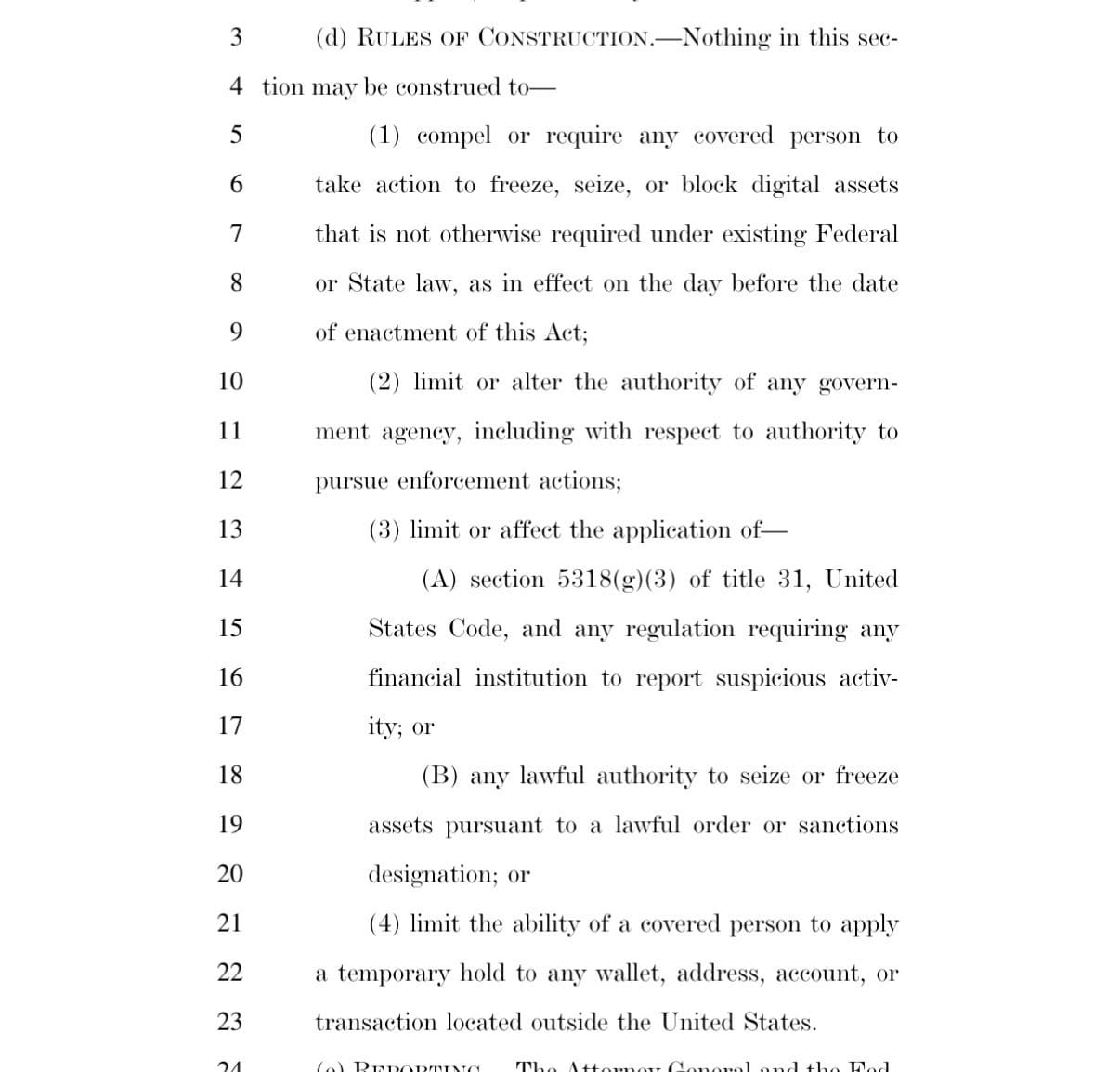
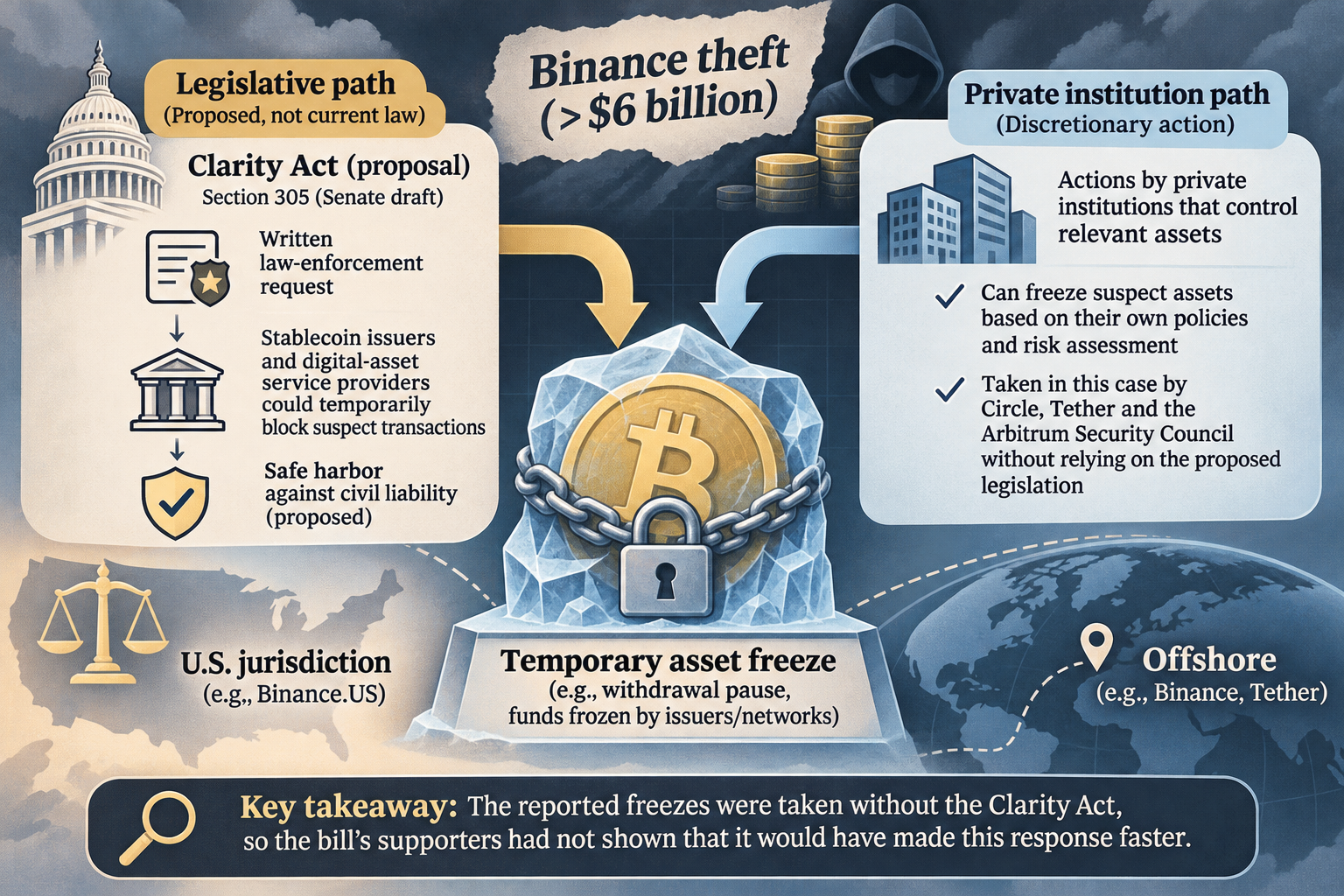
Reiter noted that Section 305 of a Senate draft contemplated temporary blocks by stablecoin issuers and digital-asset service providers following a written law-enforcement request, with a safe harbor against civil liability. That provision was a proposal, not an enacted rule. The competing interpretations described in the analysis had not been tested in court.
The jurisdiction question
Reiter’s central objection was that the debate treated Binance as though its main business were subject to U.S. rules. He cited Binance’s commitment to leave the U.S. market under its 2023 settlement with U.S. authorities, while distinguishing it from Binance.US, which he described as a separate U.S. business. In his view, calling Binance a digital-asset service provider would not, by itself, bring its offshore operations within the bill’s reach.
The analysis said Binance paused withdrawals for about two days after the reported theft. It also said Circle, Tether and the Arbitrum Security Council moved to freeze assets without relying on the proposed legislation. Reiter’s conclusion was narrower than a claim that law never matters: the actions he described were taken without the Clarity Act, so the bill’s supporters had not shown that it would have made this response faster.
Reiter extended that jurisdictional concern to Tether, arguing that U.S. authorities cannot assume a U.S. statute will directly compel an offshore company to act. His broader view—that private institutions exercising control over assets may matter more than legislation during a fast-moving incident—is an argument drawn from the reported response, not a settled legal finding.