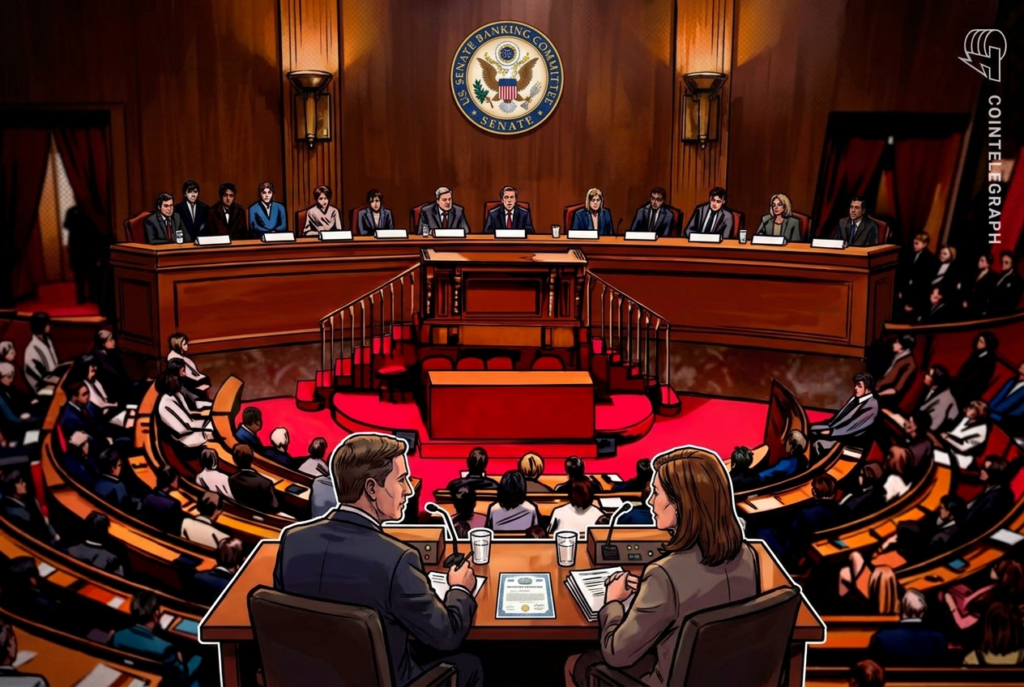
At a Nov. 19 Senate confirmation hearing, US Securities and Exchange Commission nominees Kristin Johnson and Steven Levine faced questions about investor protection and the agency’s exemption for tokenized stock trading. The original report was published on Nov. 20, 2026 (UTC+8); neither nominee had been confirmed at that time.
The SEC’s Sept. 17 exemption took effect immediately. Under certain conditions, it allows qualifying platforms to trade blockchain-based versions of US-listed shares without registering as securities exchanges. The order also invited comments on possible changes.
Johnson, President Donald Trump’s Democratic nominee and a former Commodity Futures Trading Commission commissioner, told the Senate Banking Committee she favored addressing concerns through formal rulemaking and its notice-and-comment process. She also raised Anti-Money Laundering and Know Your Customer concerns. According to a Nov. 5 public notice, 67 publicly traded companies opposed tokenization of their shares on the OKXICE platform.
Levine, Trump’s Republican nominee and a former aide to SEC Commissioner Mark Uyeda, said he had not closely studied the exemption. He understood it to be time-limited and to include investor protections. He noted that Congress permits the SEC to grant exemptions when they serve the public interest and remain consistent with investor protection requirements.
If confirmed, the two nominees would bring the five-member commission to four members: three Republicans and one Democrat. Jessica Martinez, US policy director at Fireblocks, told Cointelegraph that rules from a bipartisan commission would stand on firmer footing. Senators had until noon on Nov. 20 to submit written questions, with responses due by 5 p.m. ET on Nov. 24. A committee vote and full Senate consideration could follow; both nominees would need Senate confirmation before taking office.