
Originally reported November 6, 2026, at 19:42 (UTC+08:00). Nigeria’s Central Bank (CBN) introduced licensing rules for stablecoin issuers and other non-security virtual asset service providers. The regulations took effect on November 5, 2026, and give existing operators 180 days to apply for the appropriate licence or authorization, subject to transitional requirements.
The framework establishes separate licensing categories for naira-referenced and foreign-currency-referenced stablecoins. Issuers must obtain written CBN approval for each token before issuance, covering its classification, reference currency, reserves, name, ticker and supported blockchain networks.
Foreign-currency stablecoins may be offered, distributed, exchanged or otherwise made available to Nigerians only as Class 2 tokens issued through a Nigerian-incorporated entity holding a Foreign Currency Issuer Licence. The rules apply to activities conducted in Nigeria or affecting its payments system, financial sector or foreign-exchange market, even when an operator has no physical presence there.
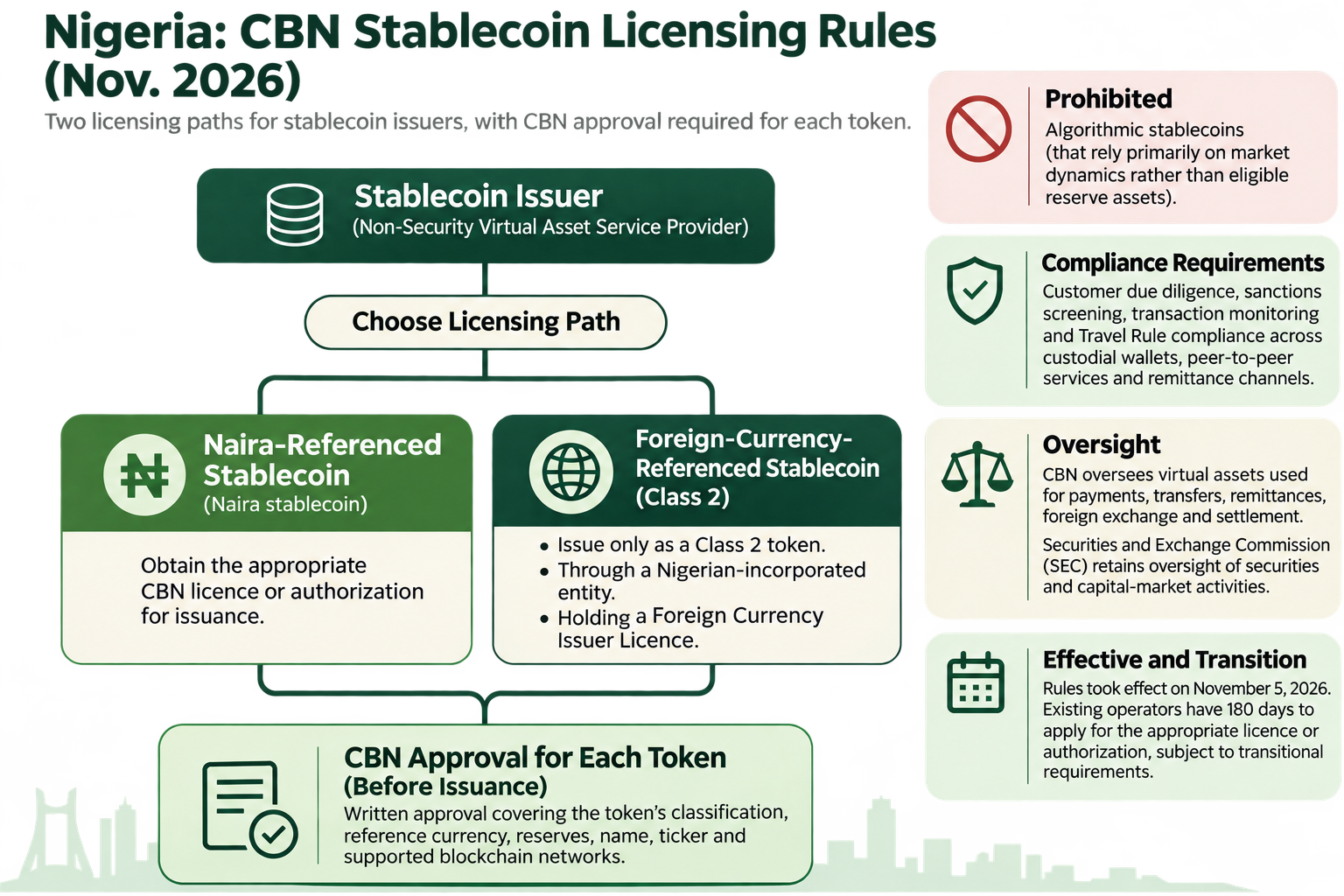
The regulations prohibit algorithmic stablecoins that rely primarily on market dynamics rather than eligible reserve assets to maintain their value. They also require customer due diligence, sanctions screening, transaction monitoring and Travel Rule compliance across custodial wallets, peer-to-peer services and remittance channels.
The CBN oversees virtual assets used for payments, transfers, remittances, foreign exchange and settlement. Nigeria’s Securities and Exchange Commission retains oversight of securities and capital-market activities; companies operating in both areas need the relevant approvals from each regulator.
Source: theblock.co (originally published 2026-11-06 19:42 UTC+8)