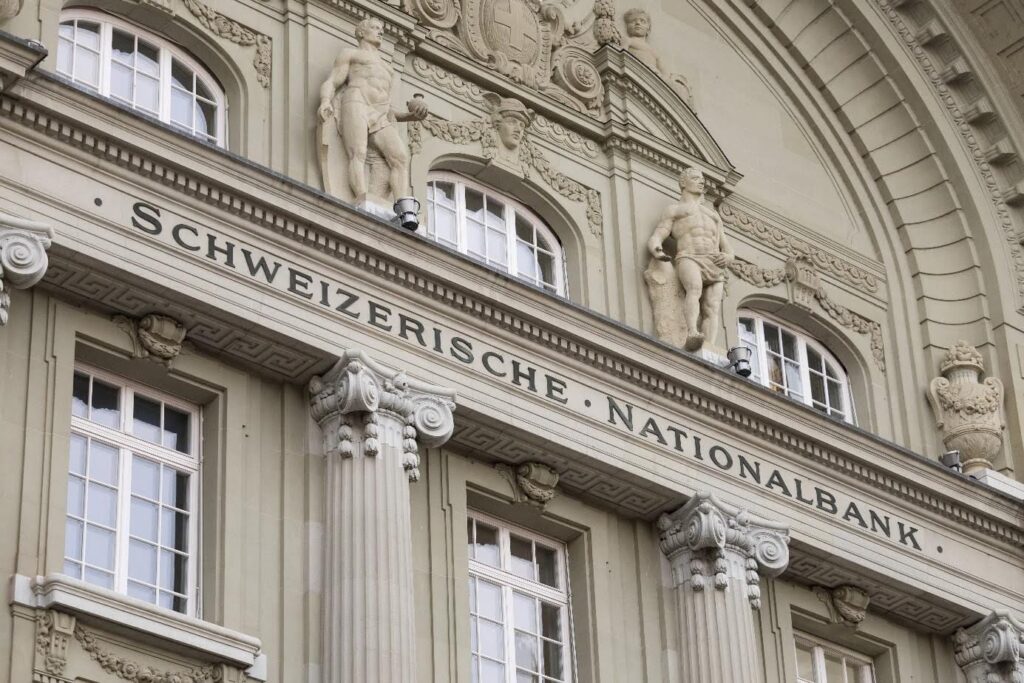
On November 24, 2026, the Swiss National Bank (SNB) and eight financial institutions announced the Swiss Financial Ledger study. It will examine whether central bank money and commercial bank money can be used to settle transactions in tokenized securities on a single distributed ledger, both within Switzerland and across borders.
The SNB said the study does not signal a decision to launch the ledger or a commitment to provide financial institutions with tokenized central bank money. Its focus is settlement among regulated institutions, not trading in public cryptocurrencies.
Design and governance
The SNB’s partners are UBS, SIX, Zürcher Kantonalbank, PostFinance, Banque Cantonale Vaudoise, Basler Kantonalbank, Sygnum Bank and the settlement platform Seturion. Together they will examine how the ledger could be designed, who would govern it and how it would operate. The SNB has established a strategic board with representatives of the participating institutions. The Swiss Bankers Association has an observer role.

Links to Helvetia and Agorá
The study is part of Project Helvetia, which examines how to settle tokenized asset transactions in central bank money. It also draws on Project Agorá, a public-private initiative started by the Bank for International Settlements (BIS) and the Institute of International Finance.
The BIS has highlighted how Agorá’s prototype could use tokenized central bank reserves and commercial bank deposits for atomic settlement across currencies and jurisdictions: the linked transfers would either all complete or none would. For the Swiss study, the question remains whether a shared ledger would be secure, efficient and useful enough in practice to move beyond research.